


Skip to content
  • Home
  • About Us
  • Affiliates
  • SF Music Day
  • Musical Grant Program
  • Calendar
  • Support
    • Donate to InterMusic SF
    • Donate to an Affiliate
Menu
  • Home
  • About Us
  • Affiliates
  • SF Music Day
  • Musical Grant Program
  • Calendar
  • Support
    • Donate to InterMusic SF
    • Donate to an Affiliate
Facebook Twitter Instagram Donate

InterMusic SF

InterMusic SF is a San Francisco Bay Area non-profit organization that advocates for those who create, share, and love the art of small ensemble music. 

SF Music Day Save the Date!

Mark your calendars and stay tuned as SF Music Day returns to the SF War Memorial Veterans Building March 20, 2022.
Learn more

Musical Grant Program

The MGP awards project grants to support the creative musical activity of SF Bay Area musicians whose projects focus specifically on music for the small ensemble.

Learn More

InterMusic SF Affiliates

Members of our Fiscal Sponsorship Program include ensembles, presenters, and composers focused on professional development and fundraising to support their work.

See Affiliates

SF Music Day

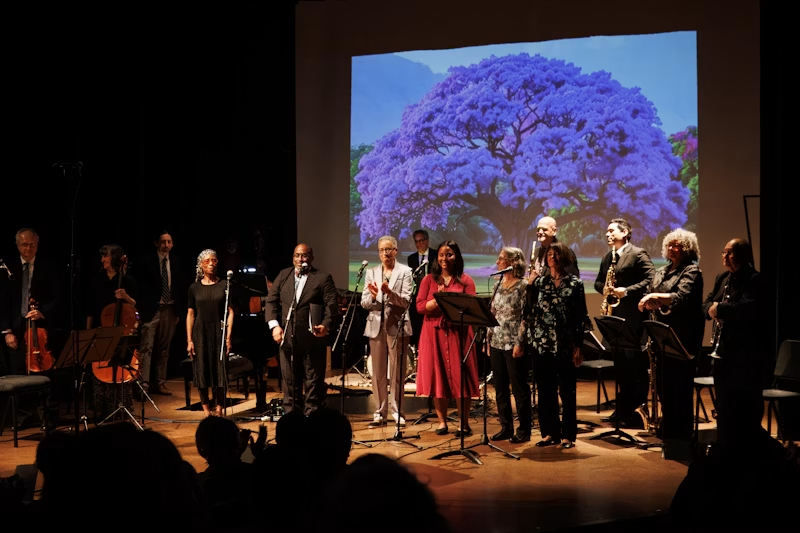
Our annual music festival celebrating the Bay Area music community, providing local audiences the opportunity to explore and savor the diverse range of music being made in our region.

Learn More

What We Do

Energizing the Bay Area Music Community

InterMusic SF acts as a catalyst to help local artists thrive via career development and creative collaboration.

Make a Donation

Our Impact in the Bay Area

The Numbers Count

1
Free Performances
1
Musicians Supported
$ 1
Granted to Projects

Helping Our Music Community grow

New Affiliates

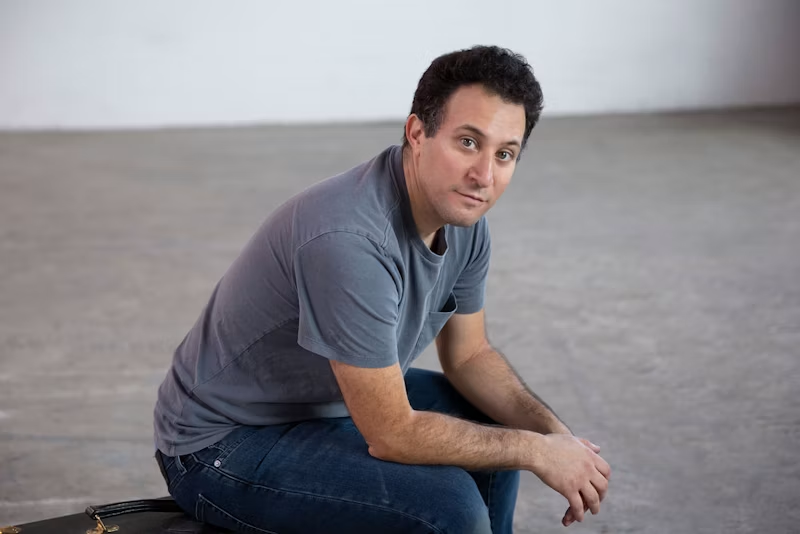
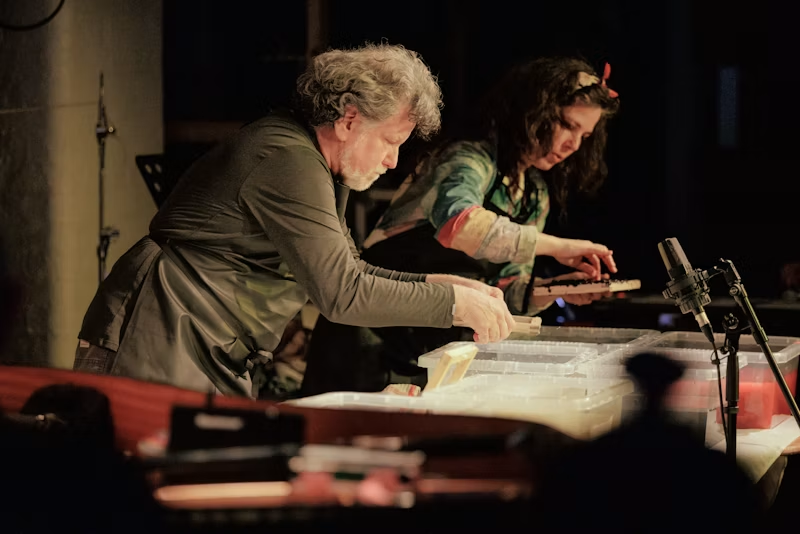
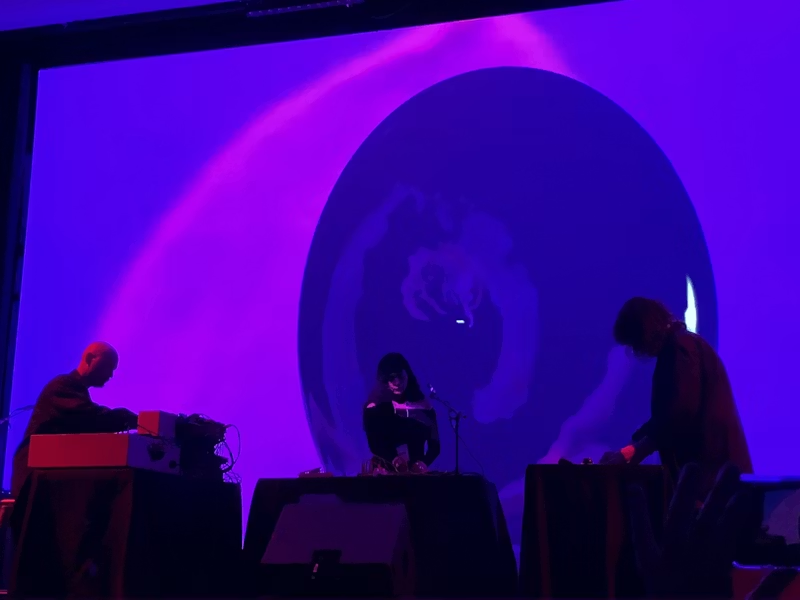
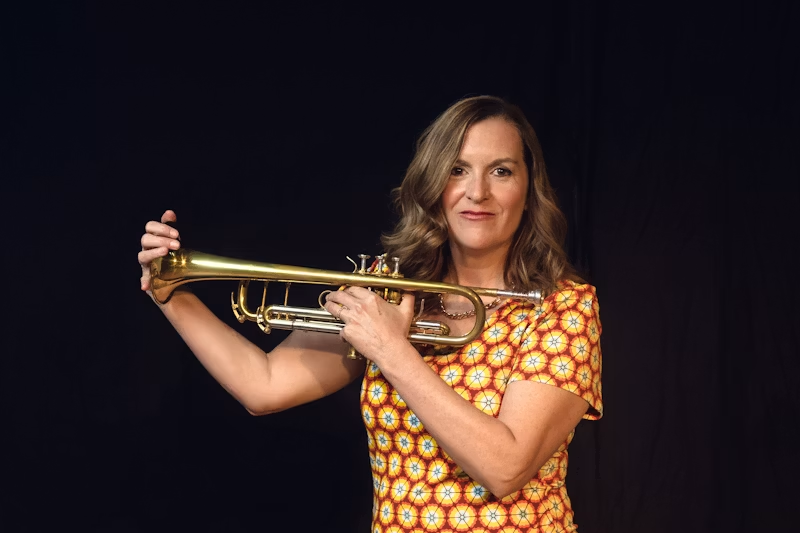
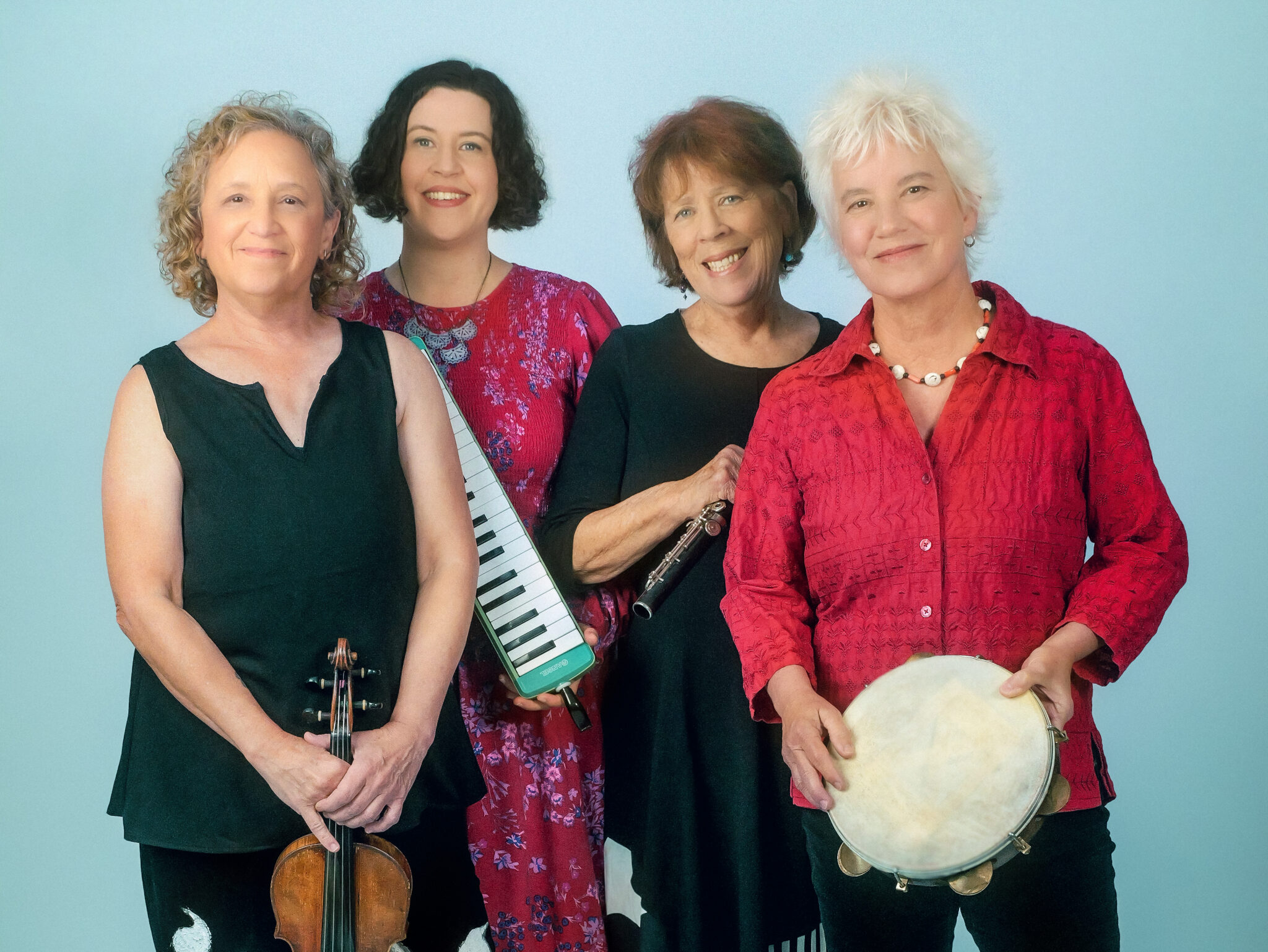
Ian Dogole & Music Beyond Borders

Golden Gate Park Band

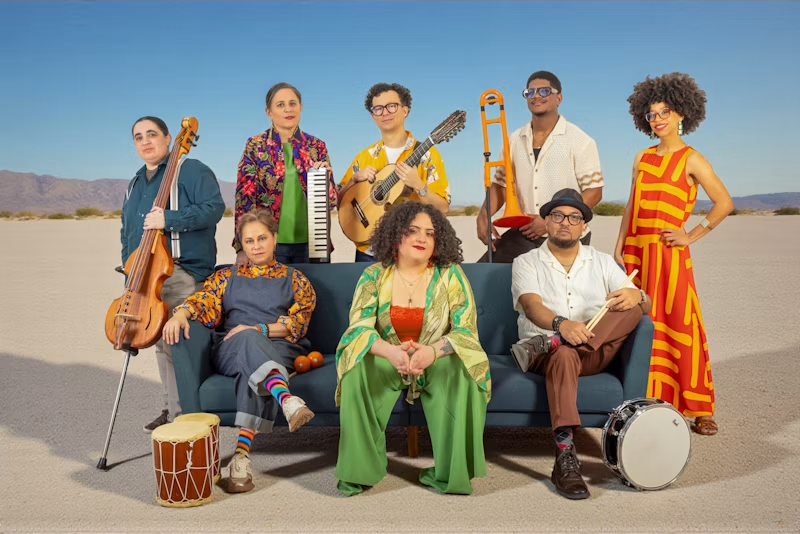
Mariah Parker’s Indo Latin Jazz Ensemble

Matt Renzi

Amy Stephens

Osteria Divino – Jazz at Divino

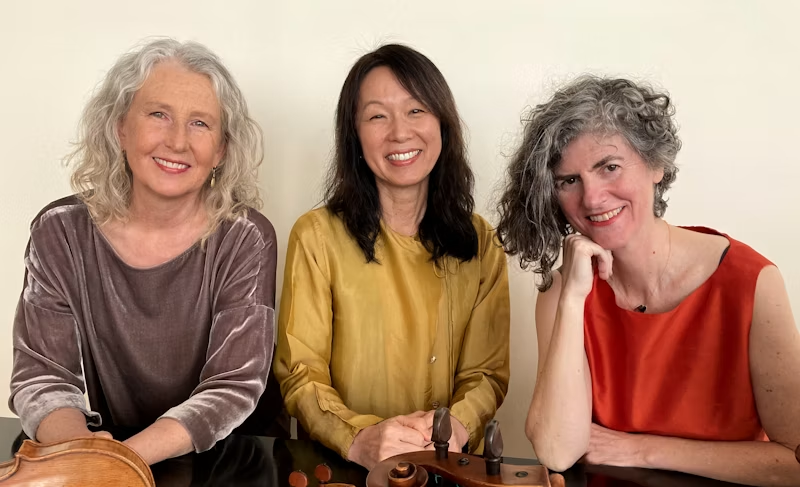
Deep Tones

Ultra World X-tet

View All Affiliates

Our Supporters

InterMusic SF is a Non-Profit organization that is made possible by our supporters

What our Community is saying about us

The Word on the Street

InterMusic SF provides concert opportunities that are uniquely enriching. The cross-genre programming and sheer abundance of riches of SF Music Day provides an opportunity to deeply connect with music-loving audiences. InterMusic SF provides opportunities for both musicians and audiences that I hope will continue to be appreciated and supported.
David JamesGuitarist & Composer
David James
"The affiliate program has opened up a world of possibilities for me to be able to better sustain my work, and has connected me to more potential funders to support my music projects."
Lisa MezzacappaBassist and composer
Lisa Mezzacappa
Previous
Next

Subscribe to our newsletter

Stay up to date with InterMusic SF's activities

Explore performances in Bay Area

Event Calendar

Our Programs

  • Affiliate program
  • SF Music Day
  • Musical Grant Program
  • Calendar

Affiliate Links

  • Become an Affiliate
  • Workshops
  • Add an event
  • File a MGP Report

Stay Connected

  • Contact Us
  • Press Page
  • Logos
  • Job Opening

Follow Us

  • Facebook
  • Twitter
  • YouTube
  • Instagram

Make a Donation

Support the musicians of the Bay Area

Donate Today

© 2020 InterMusic SF | 1446 Market Street San Francisco, CA 94102

Musical Grant Program Guide

How to Apply
Who Can Apply & What Do We Fund?
Application Tips
FAQ
Cypress Award
Review Process
MGP Reporting
How to Apply

The 2021 MGP application cycle is closed. Stay tuned for 2022 MGP announcements in early 2022.

  1. Read the sections “About the MGP“,  “Who can apply”, and “FAQ’s” to see if your project fits the requirements of the MGP.
  2. All applicants must complete the MGP Eligibility Form (Link will be posted along with the 2022 MGP announcement). After completing, an InterMusic SF staff member will review your submission to determine the eligibility of your project. Eligibility is based on project constraints and past award history of the applicant and project partners. This step is required.
  3. In 1-3 business days, an InterMusic SF Staff will contact you regarding your eligibility. If approved, an email with a personal link to your MGP application will be sent to you. This link is the only way you can access and submit your MGP application.


The 2021 MGP application cycle is closed. Stay tuned for 2022 MGP announcements in early 2022.


Who Can Apply & What Do We Fund?

Applicants may propose projects for performers, composers, and/or presenters, from genres representing early music, classical music, new music and/or jazz. Projects must involve the participation of one or more small ensembles.

PLEASE NOTE: InterMusic SF defines a small ensemble as a group of two or more musical performers – instrumentalists or singers – interacting in real time – each playing one on a part, without a conductor.

A PERFORMER applicant can apply as:

  • an ensemble with consistent membership and a collective history of public performance;
  • an ensemble created by an individual for a specific performance project in which each ensemble member demonstrates a history of public performance;
  • an ensemble in collaboration with an eligible project partner, including a composer, guest performer or additional ensemble.

A COMPOSER applicant can apply as:

  • a composer of a new work in partnership with an eligible ensemble;
  • a composer who is a lead performing artist of an ensemble performing their original composition(s).

A composer applicant MUST include at least one project partner

A PRESENTER applicant can apply as:

  • a presenter of an ongoing concert series (with a history of presenting professional music performances to the public) in partnership with one eligible ensemble;
  • a presenter of a short-duration festival (with a history of presenting professional music performances to the public) in partnership with one or more eligible ensembles.

A presenter applicant MUST include at least one project partner

Please Note: Any presenter, ensemble or composer may appear on only ONE MGP application per cycle. Individual performing musicians may appear on more than one application as members of different ensembles as long as the ensembles have separate and distinct identities. The primary contact/applicant for a project may submit only one application per cycle. 

Project Partner

A project partner is defined as an individual or ensemble that collaborates with the lead applicant for a project. The project partner must satisfy all MGP eligibility requirements.

Eligibility

All applicants must confirm their eligibility and the eligibility of any project partner(s) with InterMusic SF. Please visit MGP ELIGIBILITY SCREENING (eligibility screening is now closed), answer the questions and submit your answers. InterMusic SF will reply as soon as possible if further clarification about your project is needed. For questions, please contact: [email protected]

Applicants and project partners must:

  • at least 18 years of age;
  • be a U.S. citizen or a legal resident;
  • reside in and plan to present their project in one of the nine counties of the greater San Francisco Bay Area (Alameda, Contra Costa, Marin, Napa, San Francisco, San Mateo, Santa Clara, Solano, and Sonoma);
  • have an annual organizational budget of under $150,000 ( a project partner with an annual budget of more than $150,000 will be assessted on a project by project basis). 

Past MGP Awardees

Those who received an MGP award in 2021 are NOT ELIGIBLE TO APPLY in 2022, but will be eligible to apply for the MGP 2023 cycle if your project is completed and you have submitted your Final Report by January 31, 2022. Other past MGP awardees (from 2020 and earlier) must have submitted a Final Report for their completed project by January 31, 2022, to be eligible to apply in 2022. This restriction also applies to all project partners who were part of a previous project.

WHAT DO WE FUND?

The MGP is a music project-based grant opportunity. Eligible expenses include:

  • Artist, rehearsal and/or performance fees;
  • Direct production costs (sound and video recording and engineering costs, instrument rental, instrument tuning, and/or sound system rental necessary for performance);
  • Venue rental costs;
  • Composer fees  for commissioning and/or presentation of a new workand/or associated copying costs;
  • PR and marketing costs specific to the project.

WHAT DON’T WE FUND?

  • An entire season of concerts (although costs associated with a particular concert or festival are eligible);
  • Concerts not open to the general public (i.e., educational or outreach activities at schools or performances exclusively for residents of a senior center, etc.);
  • General operating expenses;
  • Projects in which either applicant or their partner’s organization or ensemble has a budget greater than $150,000;
  • Fundraising events;
  • Purchasing of equipment;
  • Paying off of debts.
Application Tips

Our goal is to make the Musical Grant Program application easy to navigate. Please review our tips on topics and terms you will encounter in the applications.

Practice Applications

We highly recommend all applicants complete this application offline on a practice form first. Once you have completed the practice PDF, you can easily copy and paste your grant material into this online application.

Word Doc

Google Doc

Terms

Project Partner

A project partner is any additional artist or organization that will play an integral part in your proposed project.  A project partner can be a composer, solo musician, ensemble, and/or a presenter. 

If your project will require a project partner, it is important to already know exactly whom you plan to collaborate with and how before you apply for the MGP. This is true for ANY grant you apply for.

Examples of Project Partners:

– An ENSEMBLE looking to have a piece commissioned for them by a Bay Area composer. (The composer is the project partner).

– A PRESENTER looking to have a new concert series with Bay Area ensembles. (Each of the ensembles would be a project partner(s)).

– A COMPOSER applying to have a local Oboe Trio premiere a work on a PRESENTER’Sconcert series. ( The Oboe ensemble AND the presenter would both be the Project Partners).

Alternate Contact information

Your “Alternate Contact” can be your project partner, another ensemble/presenter member, or the next in command.

Brief Description of Project

Keep your “Brief Description” brief and very precise. In this section, you are limited to 100 words, so make every word count. Essentially this is your project narrative answering the: Who, What, Why, and When of your project. For examples of past project descriptions, see MGP past awards description.

History/Performance History

Please make sure your “History of Applicant” is current. Panelists want to see your most up to date bio. This is your chance to show your artistic mission and excellence.

Project Narrative

This is where the panelists want to see the passion for your project. Describe your project in full detail and explain how you will execute your project. Panelists want to know why you are proposing this specific project and what you envision will be the outcome for you, local musicians, and/or the community. 

Budget

This is where we want you to give us an overview of your budget. Cover all of the key areas of your project. Below is an example:

Our budget for this project is $9,700; we are asking $3,000 from the Musical Grant Program. In addition, we have a proposal under review with the Zellerbach Family Foundation ($2,500), which has supported our projects in the past. We expect to cover the remainder through earned income from ticket sales and our private donor base. Our last concert at the Music Center generated $1,800 in ticket sales and donations for that event totaled $1,500.

Project Budget

Please complete the Project Budget so that all applicable boxes contain a number, even if it is a “zero”. Your total Income should equal your total Expenses and your surplus/deficit should be as close to zero as possible (and never a deficit). 

Budget Notes

Budget Notes serve to clarify the amounts you have entered for your Project Budget. They should reflect your thinking on how you have arrived at a particular number. Budgeting of your income and expenses for your project should be based on your past experiences and also on as much firm information that you have about what your actual costs will be for the project. (ie., you should know how much a composer’s commission will be or what venue rental will be, etc.) Please be as realistic as possible and also note that InterMusic SF expects applicants to include fair and reasonable fees for any and all artists, composers and recording engineers. Please use as much or as little space as needed.

The following are examples of information to include in the budget notes:

**Budget notes can be written either by giving a detailed narrative description of the finances of your project or by explaining each line item in the project budget. 

A narrative description example is below:

The current estimated breakdown of costs: $3,200 Performer fees ($800 flat fee rate for the 4 musicians for two performances and a projected 6 rehearsals); $250 for a recording engineer; $1,000 for an administrative/PR staff member; $500 to Music Center for venue rental, staffing fees, & event insurance; $2,000 for production costs, including audio and video documentation; $2,500 for PR/ marketing (poster and postcard printing, direct mailing to Music Center mailing list, and print media ads); and $250 for equipment rental.

Alternatively, here is an example of how to write budget notes by line item:

Line 1. Foundation Grants – Zellerbach Family Foundation $2,500 (pending)

Line 3. Individuals – this figure is based on a total of $1500 donations received for our last event,

Line 6. Admissions – $25 ticket x 75 tickets = $1,875 is what we received from our last event. So we have budgeted $1800 for the proposed project.

Line 16. Performer Fees – $800 fee x 4 musicians for 2 performances and 6 rehearsals

Line 18. Technical Personnel – $250 fee for recording engineer

In-Kind Budget

Please list all in-kind donations and explain them in the information box. In-kind donations are any non-cash goods or services you or your ensemble receives over the course of the project. Some examples are below:

  1. Graphic design, audio recording or videography provided by a friend for free or at a reduced rate;
  2. Food and/or beverages donated by a local business for a performance;
  3. Free use of venue space;
  4. Artist fees for rehearsal and/or performances donated back to the ensemble or project (ie., payment of artists fees at a level that would be significantly less than at a professional union level).

In-kind donations should be listed separately from the Project Budget and they should not factor into the total budget of your project. Listing these donations is useful in demonstrating to the panel your full understanding of the time and work required for a successful project.

Cypress Award

The Cypress Award doesn’t have many stipulations for a reason. The Cypress Quartet designed this additional grant to allow for creative interpretation, so be creative but make sure you thoroughly describe your proposal.

Work Samples

We ask that all applicants try to upload recent high-quality samples that showcase artistic excellence and best correlate to your application.

FAQ

Below is a section of Frequently Asked Questions regarding the Musical Grant Program. If you don’t see the answer for your questions regarding the MGP please check the “Application Tips” page, or send an email to [email protected]

    1. Do applicants or their partners need 501(c)(3) status to apply?
      No. 501(c)(3) status is not required for applicants or their partners.

    2. Do applicants or their partners need to have fiscal sponsorship to apply?
      No, applicants or their partners do not need fiscal sponsorship to apply.

    3. I am a member of several ensembles. Can I be part of more than one application?
      Yes, though each ensemble must have its own separate identity and the primary contact/applicant for a project may submit only one application per cycle. If that applicant is involved in another, separate project application, the primary contact/applicant should be a different person.

    4. I will be an Artist in Residence at a Bay Area cultural institution during the grant period. Can I apply to fund a project that will be presented there?
      Most likely not. The MGP is designed to support smaller organizations not otherwise eligible for other funding sources, and so requires that all partners for a project have an annual organizational budget of under $150,000.

    5. My project is a CD recording and I have a contract with a record label to produce the CD. Is the record label considered a project partner and does it have to meet the MGP eligibility requirement of having a budget of under $150,000?
      No. Music publishers and labels are not considered project partners for CD recording projects.

    6. Can an applicant commission multiple composers?
      It depends on the details of the project. Project budget allocation of fair and respectful compensation to composers for the commissioning of new works is important. The MGP may support an ensemble that commissions several 3-minute pieces from a variety of composers. Or the program might support the project of an ensemble that is commissioning multiple composers with a common theme.

    7. If I am a composer or a presenter, can I submit an application that includes the participation of an ensemble that received an MGP grant in 2021 or has not yet submitted a final report on an MGP grant received in 2020 or earlier?
      No. Projects with composers and presenters must have the involvement of an eligible ensemble. Ensembles that received a grant in 2021 are not eligible to apply in 2022, either on their own or as part of a project led by a composer.

    8. If I received an MGP grant in 2020, can I apply in 2022?
      Applicants who received MGP grants in 2020 or earlier must have completed their previous MGP project and submitted their final report

      by January 31, 2022, in order to be eligible to apply for – or be a partner in – a new project in 2022. If you received an award for the 2021 cycle, you may not apply until 2023.

    9. I live outside the Greater San Francisco Bay Area, but am doing a project that will take place in this geographic region. Am I eligible for the Musical Grant Program?
      No, applicants must reside, work, and present their projects in the greater San Francisco Bay Area to be eligible to apply. If there are special circumstances that you believe would affect your eligibility under this area (i.e., you reside, work, and present artistic work half the year in the Greater Bay Area but reside elsewhere for the remainder of the year), please contact [email protected] prior to completing an application.

    10. I’m part of a performing ensemble whose project is to produce a concert in the Bay Area. We want to include a guest musician who occasionally performs with us. The members of our ensemble all live and work in the nine Bay Area counties included in the guidelines, but our guest musician resides outside the nine counties. Are we still eligible to apply to the MGP?
      Yes. An application may include guest artists or substitute players from outside the nine counties. But the project must be predominantly based in one or more of the nine counties.

    11. How many guest musicians from outside the Bay Area can I include in my application?
      It depends on the project. Our funding priority is to support the Bay Area musical community. However, we understand that even established ensembles are not always based in the same locality full-time. If the majority of the ensemble is local, and if you have other sources of funding to pay out-of-town guest artists and can demonstrate that their inclusion will benefit the local musicians and our local audiences, your application will be eligible.

    12. If I am including a composer work sample, do I also need to include the score for the work?
      You do not need to, but it is highly encouraged if available and pertinent to the type of music in question. The score should correlate to the sample being provided.

    13. I am a composer/performer and would like to assemble a new quartet of improvisers for a project. Do I need to include a History/Background page for each musician?
      No. Please fill out the first History/Background page for yourself, and include a second page, compiling short biographies of the other players onto that single page.

    14. How many grants will be awarded?
      Each year, InterMusic SF sets a particular dollar amount to be awarded and distributed. The number of grants awarded will depend on the number and quality of applications received. We anticipate awarding 15-20 grants for the upcoming 2021 cycle.

    15. Can you provide examples of the types of projects that could be supported by the Musical Grant Program?
      Please see “Past Awards”.

    16. Can you explain what to include in the mandatory project budget notes on my MGP application?
      You can write budget notes in one of two ways:
      1. Provide a detailed description for each line item in the project budget.
      2. Provide a written narrative detailing the overall rationale for the project budget.

Examples of how to write both line item budget notes and narrative budget notes are included in the Application Information and Instructions.

Cypress Award


Made possible through a generous donation from the retired Cypress String Quartet, the Cypress Award will provide up to $5,000 to a deserving musical project that strives to make an educational impact in the San Francisco Bay Area.

Artists applying for funding through the Musical Grant Program can choose to be considered for the Cypress Award, with winners being selected by a panel that will include a former member of the Cypress Quartet. The Cypress Award will be in addition to the gift provided by the Musical Grant Program.

The Cypress Award seeks to celebrate artistic excellence and educational innovation across musical genres. In their proposal, applicants must display both artistic excellence and a creative approach to education. Applicants are encouraged to be innovative, thoughtful and bold. Winners of the Cypress Award will be announced along with the full roster of Musical Grant Program recipients in the spring of 2021.

Review Process


REVIEW PROCESS AND SELECTION CRITERIA

An independent panel of four to five experts from the San Francisco Bay Area, representing the diversity of our music community, will review the applications. Their identities will remain anonymous. The decisions of the panel are final. Below are some of the criteria the panelists will use to judge your application.

History & Mission/Artistic Vision of the Applicant

Does the performer or composer applicant demonstrate a compelling history of significant musical activity by listing performances, repertoire or compositions, major collaborators, career highlights (awards, festival appearances, commissions & premieres, etc), and other pertinent biographical information? Does the presenter applicant demonstrate a significant history of successful concert presentation, citing past and/or upcoming programming and providing an organization mission statement?

Project Description

Is there a clear purpose or intention for the project, with a compelling artistic vision that is supported by good planning?

Artistic Excellence and Potential

Is there a high level of musical ability and potential from a performer or composer, and evidence of ability to present high quality concert experiences if applying as a presenter?

Impact

Does the applicant address the impact that the project will have on the artists involved and, if applicable, the local community? Does the presenter applicant address how the project will advance the visibility of the ensemble and/or series in the greater San Francisco Bay Area?

Publicity/Promotion

Is there a well-defined plan for publicity and/or promotion of the project?

Timeline

Is the timeline for the project clearly defined and does it support the successful execution of the project?

Budget

Is the project budget well thought-out and does it demonstrate that the applicant has the potential resources and capacity to undertake and complete the project?

Panelists will be aware of prior MGP awardees and their projects. If you have received an award in the past, be sure to make a strong case for why you need to undertake your new proposed project, and why it’s important to do so for this grant cycle.

MGP Reporting

All Completed Projects Must Fill Out A MGP Report:

Complete this online form.

To see the questions and prepare your answers beforehand, please use this PDF for reference.

Past awardees who are applying for a new cycle:
Musical Grant Program awardees must have completed their projects, filed a project report, and wait out one cycle before reapplying. 

Please email [email protected] if you have any questions regarding your final report.

Home

InterMusic SF InterMusic SF is a San Francisco Bay Area non-profit organization that advocates for those who create, share, and love the art of small ensemble music.  SF Music Day Save the Date! Mark your calendars and stay tuned as SF Music Day returns to the SF War Memorial Veterans Building March 20, 2022. Learn more Musical Grant Program The MGP awards project grants to support the creative musical activity of SF Bay Area musicians whose projects focus specifically on music for the small ensemble. Learn More InterMusic SF Affiliates Members of our Fiscal Sponsorship Program include ensembles, presenters, and composers focused on professional development and fundraising to support their work. See Affiliates SF Music Day Our annual music festival celebrating the Bay Area music community, providing local audiences the opportunity to explore and savor the diverse range of music being made in our region. Learn More What We Do Energizing the Bay Area Music Community InterMusic SF acts as a catalyst to help local artists thrive via career development and creative collaboration. Make a Donation https://www.youtube.com/watch?v=BpUtua1FfV4&feature=youtu.be Our Impact in the Bay Area The Numbers Count 1 Free Performances 1 Musicians Supported $ 1 Granted to Projects Helping Our Music Community grow New Affiliates View All Affiliates Our Supporters InterMusic SF is a Non-Profit organization that is made possible by our supporters What our Community is saying about us The Word on the Street InterMusic SF provides concert opportunities that are uniquely enriching. The cross-genre programming and sheer abundance of riches of SF Music Day provides an opportunity to deeply connect with music-loving audiences. InterMusic SF provides opportunities for both musicians and audiences that I hope will continue to be appreciated and supported. David JamesGuitarist & Composer "The affiliate program has opened up a world of possibilities for me to be able to better sustain my work, and has connected me to more potential funders to support my music projects." Lisa MezzacappaBassist and composer Previous Next Subscribe to our newsletter Stay up to date with InterMusic SF's activities Explore performances in Bay Area Event Calendar
Affiliate Website
Facebook Twitter Youtube
Affiliate
Resources
  • Affiliate Workshops

  • Music Grant List

  • Tax/Affiliate Forms

  • Affiliate Handbook

Coming Soon

contact us

Let us know if you have a question.

Phone: (415) 818-2825​

1446 Market Street
San Francisco, CA 94102